
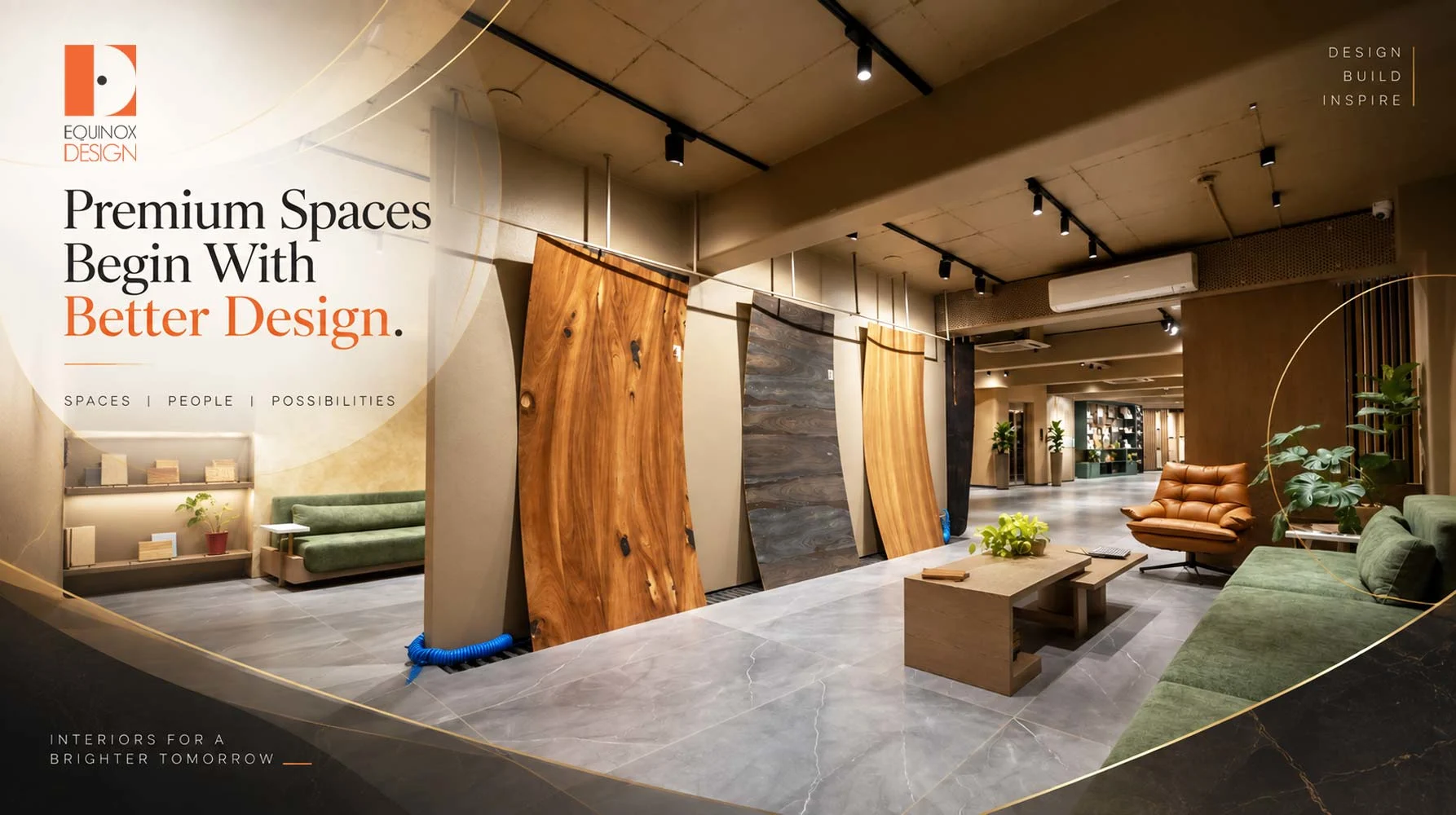
Have you ever walked into a place and immediately thought, “This feels expensive”?
You may not know what the flooring costs. You may not recognise the stone, the furniture, or the lighting fixtures. Nobody may have told you that the space was designed as a luxury environment. Yet, somehow, you can feel the difference. The space feels calmer, more considered, more polished and somehow more valuable.
That reaction rarely comes from one expensive element.
It comes from how everything works together.
The way the light falls across a surface. The amount of breathing space between furniture. The proportion of a room. The way materials complement each other. The way your eyes naturally move from one element to another. Even the small details you don’t consciously notice can change how a space feels.
That is the interesting thing about premium interiors. They don’t always need to announce that they are premium. They make you feel it.
And when the space is a showroom, office, retail environment or commercial property, that feeling becomes even more important because the interior is not only creating an atmosphere. It is also introducing your brand before your team gets the opportunity to do it.
Why Some Spaces Feel Premium
Think about two spaces selling similar products. Both have good lighting, attractive displays and quality products. Yet one feels ordinary while the other feels considerably more refined. The difference may not be obvious at first. There may not be one dramatic feature responsible for it. Instead, the premium feeling often comes from a collection of smaller decisions made correctly.
A well-designed interior design showroom understands that customers experience a space as a whole. They notice whether the entrance feels welcoming, whether products are easy to discover, whether the circulation feels natural and whether the environment feels crowded or comfortable. They may never say, “The visual hierarchy is working beautifully here,” but they will notice whether the space feels effortless to explore.
This is why premium design is not simply about adding expensive materials. A costly marble surface cannot compensate for poor planning. Designer furniture cannot automatically make a space luxurious if it is placed without considering proportion. Decorative lighting cannot create a premium experience if the overall space feels visually chaotic.
Premium design is often quieter than that.
It is about balance, restraint and intention. It is knowing what to add, what to remove and where to allow the space to breathe. When these decisions come together, customers may not be able to explain exactly what they like about the space, but they can certainly feel that something is different.
Premium Begins with Intentional Design
There is a common assumption that premium interiors require premium-priced materials everywhere. In reality, the feeling of luxury is often created by how thoughtfully those materials and elements are used.
Take lighting, for example. The same material can look completely different under poorly planned lighting and carefully considered lighting. The same furniture can feel elegant in one setting and misplaced in another. A beautiful finish can lose its impact when surrounded by too many competing textures. Premium design depends on understanding these relationships.
Space planning plays an equally important role. People should be able to move through a space without constantly thinking about where to go next. Displays should have enough breathing room to attract attention. Furniture should support the proportions of the room rather than overpower them. Important elements should have their own visual presence instead of competing for attention.
Then come the details.
The edge of a panel. The alignment of surfaces. The transition between two materials. The consistency of finishes. The quality of hardware. The placement of lighting. These may appear insignificant when considered individually, but together they contribute to whether a space feels carefully crafted or simply put together.
That is why premium interior design is less about making a space look expensive and more about making every decision feel deliberate.
Interior Architecture and Design in Rajkot
When a space needs to communicate quality, interior architecture becomes much more than decoration. It brings together the physical structure, planning, functionality, materials, lighting and visual identity of the space so that they work as one experience.
This is particularly important for commercial environments and showrooms. A beautifully decorated room may look impressive in photographs, but an effective commercial interior has a much bigger responsibility. It needs to guide movement, support the way products are presented, create comfortable interactions and reflect the personality of the brand.
That is where interior architecture and design in Rajkot can make a meaningful difference. Instead of treating each design element separately, the entire environment can be considered as one connected experience. The architecture establishes the foundation, while materials, furniture, lighting, display systems and detailing build upon it.
For a showroom, this could mean designing a customer journey where the entrance creates the first impression, the layout naturally leads people through the space, products receive the right amount of visual attention and consultation areas feel comfortable rather than transactional. For a premium residential space, the priorities may be different, but the principle remains the same: the design should respond to how people will actually live in and experience the space.
Good interior architecture therefore isn’t about making a space look complicated. Often it does the opposite. It removes unnecessary visual noise and creates clarity.
The result can feel effortless precisely because so much thought has gone into making it feel that way.
When Your Space Speaks Premium
Before a customer knows your price, they experience your space. Before they hear your brand story, they form an impression. And before your salesperson explains why your product is different, the surroundings may already be influencing how that product is perceived.
That doesn’t mean a beautiful interior can replace a good product or a strong brand. It means the physical environment becomes part of the overall brand experience.
If you position your business as premium but your space feels cluttered, inconsistent or poorly considered, there can be a disconnect between what you promise and what customers experience. On the other hand, when the interior reflects the same level of thought and quality as the brand, the experience becomes more consistent.
This is why a showroom interior design should not be treated merely as a place to display products. It should be designed around the people who enter it and the experience you want them to have. Every material, light, display, finish and transition can contribute to that experience.
And perhaps that is what makes certain spaces memorable.
You don’t always remember the exact materials used. You may not remember the dimensions of the room or the name of the furniture. But you remember how the space made you feel.
Premium design begins there.
At Equinox Design, the focus is on creating spaces where architecture, interiors and functionality come together with a clear design intent. If you want your space to communicate the same quality that your brand promises, it starts with looking beyond decoration and designing the complete experience.
FAQs
- What makes an interior feel premium?
Thoughtful space planning, lighting, materials, proportions and detailing. - Does premium design mean expensive materials?
Not always. The right selection and execution matter more than price alone. - How does showroom design affect customers?
It shapes movement, product visibility and the overall brand experience. - What is interior architecture?
It combines space, functionality, materials and design into one cohesive experience. - How do I create a premium showroom?
Start with the customer experience, then plan the layout, lighting, materials and details around it.

